Showing posts with label C Heritage portfolio. Show all posts

Saturday, 8 July 2023


LHM Abasha Bash! Festival 2023

13 June

(Text by Ayanda MaNgcobo Simelane)

Abasha Bash! is the performing arts of the Passbook Competition administered by the Durban Local History Museums. ARROWSA has been a long-standing partner of the competition and was once again represented in the 2023 installment of the competition.  The auditions took place on 16 and 17 May 2023 and the finals on 13 June 2023.

ARROWSA chair, Ms Luthando Ngema and Dr. Mary Lange (Mel) formed part of the adjudication panel. Other adjudicators were from eThekwini Living Arts, K-Cap and the KwaZulu-Natal Department of Education.  They witnessed amazing talent delivered by 17 schools from different parts of eThekwini.

The schools produced 10 minute performances under the theme: The Year of Imbokodo, in recognition of female leadership, the struggles and the role of women in society.


Ms Mohau Qalaza of LHM and founder of the Passbook Competition and Abasha Basha! in Durban (above)


Teachers and learners from Durban area schools attend the Abasha Bash! Festival at the Westville Civic Centre


Dr Mary Lange (MeL) and Ms Luthando Ngema (ARROWSA Chairperson) adjudicate at the Abasha Bash! Festival


ARROWSA collaboration: Education and Outreach

Text by Ayanda MaNgcobo Simelane

ARROWSA is engaged in education and outreach, through its partnership with the Bergtheil Museum, it has facilitated educational tours to schools from different parts of eThekwini. The tours are based on cultural heritage, incorporating classroom learning, museum education and the use of storytelling in heritage education. 


As part of the ARROWSA programme primary School learners are led through the Bergtheil Museum by Local History Museums staff.
(above and below)


MeL team Mary Lange, Aslina Madikizela, and ARROWSA alumni Jabu Nxumalo and Noluthando Shandu collaborate with ARROWSA and Durban Local History Museums to share with Grade 5 learners through experiential learning about sources of the past - including oral stories, (above) and indigenous dancing (below).


Palmiet Nature Reserve staff, Palmiet Nature Reserve Committee, Jean Senogles collaborate with ARROWSA, Durban Local History Museums (LHM) and MeL, Mary Lange and Aslina Madikizela in the LHM Passbook Competition visits to the Palmiet Nature Reserve. There the learners are part of an interactive archaeological demonstration (above) and nature walks. Both of these emphasise the central role of women in the past.


Saturday, 24 September 2022

 Happy Heritage Day 2022!

A word from our ARROWSA chairperson Luthando Ngema:


"Happy Heritage Day! May we continue to learn from our heritage of Ubuntu. May we inherit a new heritage of resistance, so our future has less residue of painful and repressive histories."


Saturday, 30 April 2022


ARROWSA presented at the Webinar: Arts, youth conscientization

 and environmental issues at COP 26: Reflections on Phone call to

 the world on 28 April 2022


The webinar was part of the Centre for Civil Society - Special Webinar Series that took place

between March and May 2022. The series is titled Reflections on COP26 and remains online

for 2022.


ARROWSA Speakers were: Mary Elizabeth Lange and Luthando Ngema and ARROWSA invited

South Roots Int.  Noluthando Shandu and Rachelle Ngalula Mukendi  to present with them. Bheki

Dlamini of ARROWSA assisted in the devising of the presentation. 


The topic of the webinar was:

ARROWSA, a registered voluntary non-profit organization based in Durban South Africa, led South Africa’s participation in an international project titled Phone Call to the World. This collaborative project with youth utilized the arts to address environmental issues. It was led by Scottish Youth Theatre, funded by the British Council and culminated in a COP26 exhibition in Glasgow of outputs from the hubs in Scotland, England, Palestine, India and South Africa. Representatives of ARROWSA and their national partner South Roots Int. in the Cape Flats will in this presentation share how ARROWSA came to be involved in a COP26 project, who the participants from Durban and Cape Flats were, what methodology was used in the project, what the project outputs were and which of these were included in the COP26 exhibition. The challenges, success and impact of the project on the participants and the organization will also be explored in the presentation.  


Thursday, 21 October 2021

Textile Women


South Roots International youth visit 

ARROWSA- SRI - Indra Congress -LHM collaborative exhibition

They Stand Their Ground 


The exhibition is at the Old Court House Museum, Durban and after seeing it and the nearby struggle exhibitions it triggered the youth to sing iNkululeko Freedom! Filmed and edited by Shanette Martin of SRI.


iNkululeko ingeyakho nawe
Freedom ingeyakho nawe
(Freedom belongs to you too)

 
#recycling  #theystandtheirgroundagainstgenderbasedviolence #theystandtheirground #oldcourthousemuseum #togetherforourplanet #freedom #theclimateconnection #phonecalltotheworld  #nationalartscouncil #durbanlocalhistorymuseum #gorsehillstudios #indracongress 

Wednesday, 6 October 2021

Heritage Day Vegetable garden ARROWSA PCTW


ARROWSA Bechet youth started their vegetable and cultural garden on South Africa's Heritage Day. The project is thanks to funding from National Arts Council for the vegetables and Phone Call to the World British Council funding via Scottish Youth Theatre for the arts materials.  The garden is an ongoing process and was continued in the Phone Call to the World ARROWSA and South Roots International week's workshop and production in the first week of October 2021. The video was filmed and edited by ARROWSA Vincent Salanji of Vinnies Vision.


#artsforsocialchange #phonecalltotheworld #COP26 #togetherforourplanet #theclimateconnection @arrowsa.artpeace @scottishyouththeatre @britishcouncil 

Wednesday, 22 September 2021

 Celebrating our natural and cultural heritage

Heritage Day 2021 


ARROWSA Bechet as part of the Phone Call to the World project will create a vegetable and herb garden that celebrates our diverse use of plants for food and wellbeing. The garden containers will be from recycled objects.


#phonecalltotheworld #togetherforourplanet #theclimateconnection #creation #reverberation @scottishyoutheatre @britishcouncil


Thursday, 22 April 2021

Phone Call to the World project –  

Now launched! 

                             www.phonecalltotheworld.org


Happy Earth Day!!  ARROWSA is thrilled to be part of this international project with South Roots International in South Africa and Indra hubs through out the world. 

We are also excited include CCMS, UKZN, Palmiet Nature Reserve and Local History Museums as our non-arts partners in South Africa.

 A collaborative project about creative action engaged with climate change issues.

 Investigate more through the project website.

Listen to young people’s voices making emergency calls from ARROWSA Bechet

and South Roots International in South Africa, 

England, India, Palestine and Scotland 

all hosted on a bespoke interactive map.

ARROWSA is thrilled to be part of this project! 

 #PhoneCallToTheWorld #TheClimateConnection #COP26 #TogetherForOurPlanet

 @southrootsinternational @scottishyouththeatre @britishcouncil

Thursday, 15 April 2021

PALMIET RIVER OF SECRET LIVES: interpreting archaeological evidence in t...


Video on the archaeology of the Palmiet Nature Reserve


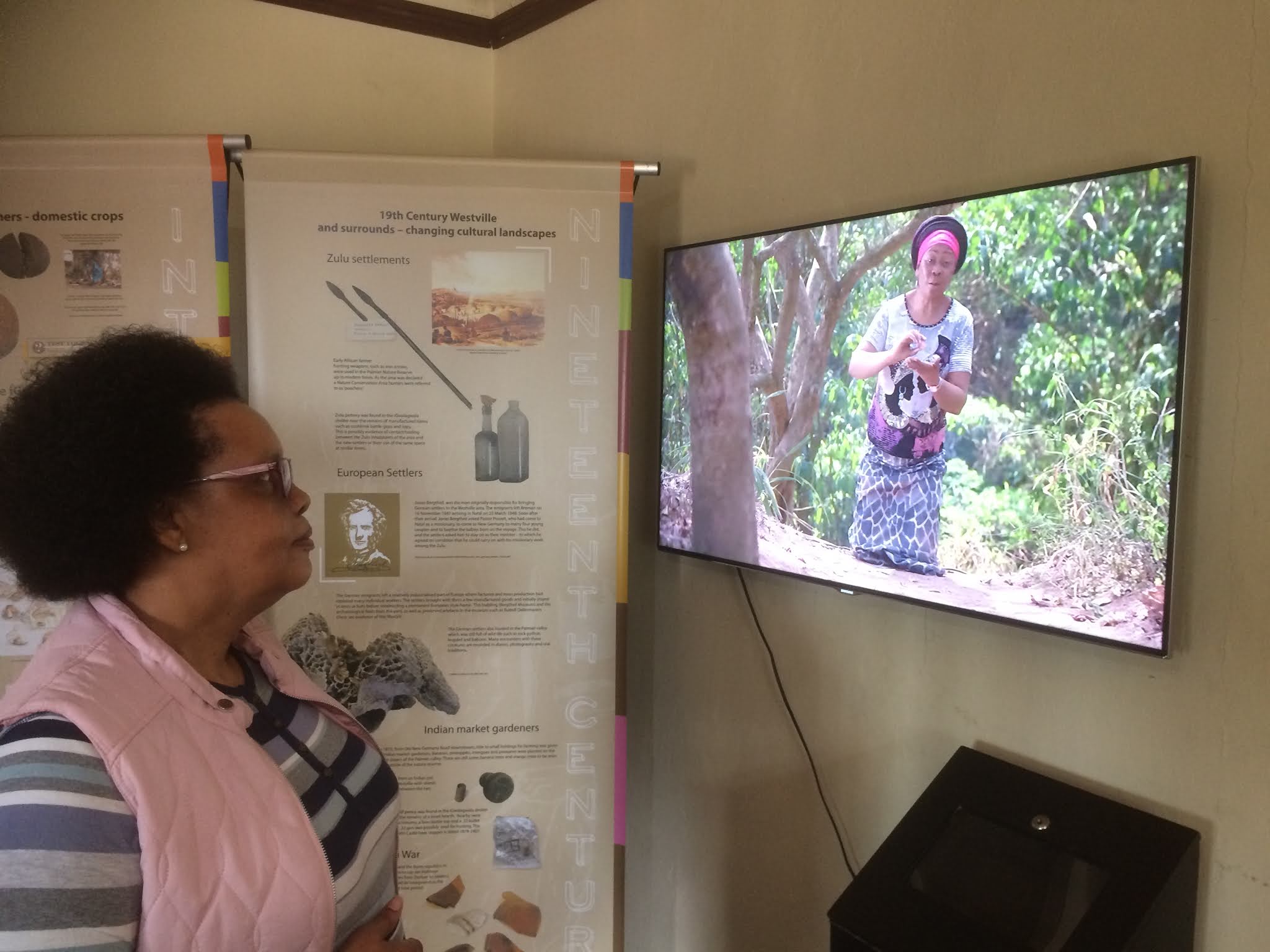
ARROWSA was part of the collaborative team led by Bergtheil Museum, Ethekwini Local History Museums, in the making of the video 'River of Secret Lives: Interpreting archaeological evidence of the Palmiet Nature Reserve'.  The video is narrated by the famous South African storyteller Dr Gcina Mhlope.  


Thursday, 25 February 2021

Gendered representations in museums: examples from South Africa 


Presented by Ayanda Ngcobo (Museum officer, Bergtheil Museum, eThekwini Local History Museums, Durban South Africa) on 12/02/2021.

ARROWSA - Indra workshop as part of the South to North and SAUKINDIA projects including youth from South Africa, India and United Kingdom 


One of a series of workshops partially funded by National Arts Council, SA. 

Blog post written by Luyanda Makoba-Hadebe 


 "Most people have little or no say in the depiction of their own history in textbook, libraries and research institutions[museums]. The meaning portrayed about Africans is painful to recall. Our museums represented the kind of heritage which glorified whites' activities and colonial history." – Nelson Mandela, 1997. 


The world health organisation defines gender as a socially constructed characteristic that defines women, men, girls, and boys (WHO,2021). The impact that gender has goes beyond the social parameters that impact one personally—gender impacts who gets seen and how they are represented in history. Ayanda Ngcobo, a master's student and a Museum officer at Bergtheil Museum in Westville, Durban work revolves around women's representation in museums. Ayanda believes that "Museums represented the power holders, their concepts of museology, of public commemoration and society." (Ngcobo,2018). 


Valencia Gushu of Bergtheil Museum, LHM, Durban watches storyteller Dr Gcina Mhlope use storytelling to describe the cultural heritage of the iGwalagwala Cliff archaeological site.


She conducted a skills transference workshop for ARROWSA that gave great insight into how gender impacts how museums. Museums, in South Africa were first established in 1800's. The colonial government of the time curated museums to represent the ideologies that they believed in. Ayanda Ngcobo elaborated on how museums had become a political space during South Africa's apartheid years. 


Voortrekker monument Pretoria

When the political hold of the government started to weaken in the 1980's, questions started to arise about how museums could be more inclusive by The South Africa Museums Association. In 1994 when South Africa became a democratic country, the African National Congress won the election and advocated for racial equality. The government created a new constitution, new policies focusing on the reconstruction of the country. Their main themes were reconciliation and nation building and wanted to impact the cultural landscape. During this time of reconciliation, the government was worked on changing how the country was represented. Efforts have been made with a focus on what dominates the cultural and heritage sector. This included statues of new heroes, like Nelson Mandela, erected alongside white European men's old statues. The statues that were being erected were predominately men. 


   King Dingane, Ncome Museum

Museums and tourism were a field under the apartheid government that Africans were not privy to. After 1994 museums were being opened in townships to represent new heroes and neglected histories. Some women activists in their own right, women like Bertha Mkhize, Charlotte Maxeke have not received the same recognition as their male counterparts. New national heroes were to be identified, the women took a back seat. When women were shown, they were usually shown as: 


 • Domestic related items 

 • Communal 

 • Auxiliary workers 


This brings about questions about how women are represented through one socially constructed domestic lens. Women are seen as the subject and not the main object in museum displays, showing how gender filters into how gender is represented. Ayanda closed her workshop with three questions: 


1. How would women want their stories to be narrated?  

2. What representations would be gender-balanced? 

3. When you think of museums around you, what have you noticed about representations of history and gender?

Wednesday, 13 May 2020

ARROWSA Legends

Luthando Ngema 

Media and Cultural Studies Department, School of Arts, University of KwaZulu-Natal


Luthando Ngema is an ARROWSA legend who is an essential ARROWSA management portfolio leader who has brought in funding for ARROWSA Bechet. Luthando is a lecturer in the Media and Cultural Studies Department, School of Arts, University of KwaZulu-Natal and a PhD candidate! Over the past few years, Luthando has co-chaired ARROWSA with Mary Lange. She started her enthusiastic support of ARROWSA as a CCMS, UKZN voluntary student in 2010 at ARROWSA Bechet and the Palmiet Nature Reserve programmes.  
Luthando’s commitment to ARROWSA over the years reflects in the work that is shared in numerous posts under ARROWSA Bechet, Palmiet Nature Reserve and Indra Congress labels in the ARROWSA blog.  These posts record some of the many activities and events that she has led. These include leading ARROWSA teams to National Arts Council funded Indra Congress bi-lateral exchanges with India and Plymouth hubs as well as Kalahari trips. Luthando has stepped in as one of the ARROWSA representatives in the eThekwini Local History Museums’ Passbook and Abasha Bash competitions. Despite her busy schedule as a lecturer, PhD candidate and mother, her enthusiasm, dedication and creative thinking inspire the ARROWSA participants and management! 


Luthando Ngema presents in Plymouth, United Kingdom on ARROWSA, 2015
  A hand mapping exercise led by Luthando in Lucknow, India 2014


Luthando Ngema with Aslina Madikizela at the 
ARROWSA -  Palmiet Nature Reserve programme, 2015.


Luthando representing ARROWSA at the eThekwini Local History Museum's Abasha Bash competition
.

ARROWSA Legends

Lauren Dyll, Centre for Communication, Media and Society,  University of KwaZulu-Natal.


Prof Lauren Eva Dyll has been a staunch supporter of ARROWSA since 2004! Lauren's extended family, including her mother Anne Ross, are also legends in the way that they have helped fundraise over the years. They have also provided support behind the scenes to the leader of ARROWSA Bechet, Mr Bheki Dlamini. 

Lauren is a mother of two young children and a very busy woman who is a perfectionist achiever.  She works as Associate Professor in the Centre for Communication, Media and Society and Academic Leader for Community Engagement in the School of Applied Human Sciences. Considering all Lauren's personal and professional commitments one may wonder why she continues to serve as a volunteer in ARROWSA management?

Lauren explains below that "laughter and learning" are what have kept her working with and for ARROWSA as a volunteer for so many years. (For more information on Lauren's participation linked to ARROWSA see the Community Engagement partner CCMS, ARROWSA Bechet and  Research portfolio labels of the ARROWSA blog).

"I was asked me to write about why I have stayed involved in ARROWSA for all these years. On a personal note it can be summed up in one word: laughter. When I met Mary Lange during a research field trip to the Kalahari, not only did I meet a compassionate person and dedicated researcher, but someone whose wit and fun-loving nature could make people across many different ages, cultures and races burst out in heartfelt laughter together. Not only does laughter express joy but physiologically it releases endorphins that assist in reducing stress. In this simple yet powerful way Mary demonstrated to me what ARROWSA is all about – individual and collective expression, intercultural connection and well-being. The same was achieved when I accompanied the Bechet learners, teachers and Mary on their first intercultural trip to Plymouth in the UK. So when Mary asked if I would consider volunteering as a member of the ARROWSA management committee I jumped at the opportunity. Academically, my research centres on participatory communication, issues of identity and critical indigenous research methodologies. Being involved with ARROWSA has animated the principles and processes attached to these interests. This has been through sitting on a sand dune with Vetkat Kruiper listening to him explain to Mary what his vision was for his book, Mooi Loop; Bheki’s performances that explore different perceptions of heritage with the Bechet learners, co-authoring the book, Engraved Landscape: Biesje Poort, Many Voices with academics from different higher learning institutions, archeologists and KhoeSan descendants; the DUT/ARROWSA/CCMS jewellery exhibitions where proceeds are ‘paid forward’ to invest in further learning exchanges, and now with the current Mashishing Marking Memories project that examines the potentiality of participation as a tool in post-processual archeology, as the project records the intangible cultural heritage associated with the sites via storytelling and oral interpretations by a diverse research team, as well as their contemporary educational and tourism resource potential. Two words then: laughter and learning."


Lauren and ARROWSA Bechet participants at Stonehenge, UK, 2006.


Lauren (centre) with Mary Lange and Colleen Manning (ARROWSA Bechet) 
at Dartmoor Museum, UK, 2006.

Sunday, 7 July 2019

RESEARCH PORTFOLIO

ARROWSA has a Research Portfolio led by Dr Lauren Dyll of the Centre for Communication, Media and Society (CCMS) University of KwaZulu-Natal (UKZN).


The most recent research project that ARROWSA has assisted in took place in Lydenburg /Mashishing, Mpumalanga, South Africa. See the article below written by Dr Lauren Dyll.


The Marking Memories project is one of the projects that characterises this research and community engagement partnership. Dr Mary Lange is instrumental in the Mashishing project as an Arts, Culture and Heritage specialist, is the ARROWSA chairperson and is a CCMS Honorary lecturer. Dr Lauren Dyll is the project leader, senior lecturer at CCMS and is head of the research portfolio for ARROWSA.

On 4 June 2019 Dr Mary Lange, Nongcebo Ngcobo and Dr Lauren Dyll set out for Mpumalanga to conduct a preliminary field trip for the research project, “Marking memories: pre-industrial to contemporary, north of the Garib River and west of the Lembombo Mountains”. The project aims to operationalise indigenous knowledge systems in a diverse contemporary South African society by the inclusion of diverse African languages, and comparisons of past through to present engravings found in two different regions of South Africa.  Engravings can be considered markings of identity. In order to foreground the idea of living heritage and dynamic identities an important component of the project is to document the multivocal, intercultural readings of the local rock engravings by members of a diverse research team that includes academics, local professionals (teachers and museum staff) and local community members. 

Also of interest to the project are the ways in which people in Mashishing today, use markings for their personal or community identity. Interesting discussions emanated both from the teacher’s workshop facilitated by Dr Mary and the interviews Nongcebo conducted with Busisiwe Ngwane (a local teacher) and several museum staff. Nongcebo, who is supervised by Dr Lauren, is writing her Masters within the broader project. Her topic assesses the potentiality of participation within the Mashishing Marking Memories project from a culture-centered approach. JP Celliers, Lydenburg Museum curator, spent two days with Dr Mary, Nongcebo and Dr Lauren. They visited the museum itself, as well as the ‘Bokoni City’ that includes remnants of the Late Iron age stonewalled homesteads of the Koni people – a farming community who lived in Mpumalanga between 1500s- 1820s.


(L-R): Ngcobo , Celliers and Dr Mary speak to Busisiwe Ngwane about topics of heritage in the school curriculum. This was at the Lydenburg museum.

They also did a recce of the Boomplaats Rocks Art site that reveals direct evidence of how the Late Iron Age Bokoni farmers lived and organised their living space – many engravings depict the typical Nguni settlement patterns. Although the engravings’ authorship and subject matter is becoming clearer, its meanings and motivation for its creation remain poorly understood. Mary, Nongcebo and Dr Lauren are grateful to Lydenburg Museum staff for their warm hospitality and insightful couple of days.

   
Embarking on the 21 June 2019
Marking Memories Mashishing Project 
Photo by JP Celliers Photo by Mary Lange Photo by Lauren Dyll
In photo:

 
(L-R) Dr Lauren, Dr Mary and Ngcobo admire a large stone engraving 


Dr Lauren and Celliers at stone wall settlement


(L-R) Ngcobo, Dr Mary and Celliers in a discussion 


Further examples of ARROWSA Research Portfolio projects are included in the 2017-2018 report below written by Dr Lauren Dyll.


ARROWSA (Art, Culture & Heritage for Peace) Research Report
1 April 2017 – 31 March 2018

Publications:
The following publications includes data from ARROWSA-related research projects.
Dyll, L. (2018) Indigenous environmental knowledge and challenging dualisms in development: observations from the Kalahari, Development in Practice, 28(3), 332-344. DOI: 10.1080/09614524.2018.1438368.

Lange, M.E. (2016) Marking memories: indigenous north of the ! Garib River and contemporary in Westville, South Africa, Critical Arts, 30:6, 855-876, DOI: 10.1080/02560046.2016.1263218.
Lange, M & Ngema, L. (2017) Arts as a resource for reconciliation, ARROWSA in South Africa, WUMEN BAGUNG Communication for Development and Social Change Bulletin, RMIT.

Conferences:
The following presentations includes data from ARROWSA-related research projects.
Dyll, L. (Nov 2017) Attended and presented a paper at the Consuming the Environment conference, at Gavle University (Sweden), “Indigenous environmental knowledge and challenging dualisms in development: two Kalahari case studies”.

Action research
Continued action research on the Palmiet Nature Reserve and Bergtheil programmes (details in other portfolio report sections)

Indra Congress / symposium preparations
Preparations for Indra Congress Research Symposium (to be held in July 2018), facilitated by Miranda Jahanger (ARROWSA/ Drama and Performance Studies).

Wednesday, 18 July 2018

Indra Congress 'Pathways' 
Reflection and thanks!
Umuntu Ngumuntu Ngabantu: 
I can't but We can!

                                                                                                      Beach Front parade (Photo by Mary-Ann Lange)

The Indra Congress "Pathways" surpassed expectations and resulted in an enthusiastic, energetic, enjoyable, thought provoking week that included sharing of cultures, skills, knowledge, friendship, tears and laughter through the arts! International Mandela Day seems a relevant day to reflect on how so many individuals from different cultures from different parts of South Africa, Africa and the world could come together, share and create arts, and become one people for a week.

Our initial budget for holding a congress in Durban for Indra was R750 000.00. We only managed to receive R30 000.00 formal funding. How did we then manage to host an international youth congress for approximately 90 people for a week and still maintain a high standard of arts skills and intercultural exchange? In this post (based on my address to the congress participants on the final day of the congress) as chairperson of ARROWSA and co-ordinator of the pre-, during and post Indra Congress Pathways, I'd like to reflect on who assisted in making the week such a success!  Although names of individuals and organisations will be listed, in truth, the amazing aspect of the congress was that it was a group effort. The reflection and thanks is shared not only to publicly acknowledge all who contributed to the congress but also to encourage other organisations and individuals to go ahead with planning events even if major funding is not available.

Acknowledgment is hereby given to the following people, organisations and institutions for their contributions:

Founder of Indra Congress and assistant coordinator of Indra Congress 'Pathways':
David Oddie (Director Indra Congress)

                               David Oddie as guest speaker at the congress opening (Photo by Alix Harris)

Fund raising:
  - Crowd funding - Luthando Ngema (ARROWSA management and Media and Cultural Studies UKZN)
   - Raising donations - Bhekithemba Dlamini (ARROWSA management and Bechet High School) and Dr Lauren Dyll (ARROWSA management and CCMS, UKZN)
    - Jewellery auction donation of Indra Net necklace - Kathlyn Allan (Author Jewellers)
    - Sponsoring of Instagram advert for jewellery auction - Luthando Ngema
    - Jewellery raffle donation of 'the giving hand' necklace - Kathlyn Allan (Author Jewellers)
Support for the above was especially from ARROWSA management and ARROWSA Bechet's family, colleagues and friends.

  
       Luthando Ngema (Photo Mary Lange)                                  Shanette Martin (Photo by Mary-Ann Lange)

Social Media build up on Indra Congress Pathways Facebook page- all countries participants and leaders
Press releases - Miliswa Magongo and Luthando Ngema
Congress media and equipment:                                           
  - Filming - Shanette Martin (Director South Roots International)
  - Co-ordination of  media volunteers and social media posting -Luthando Ngema
 - Media volunteers - Samantha Madondo (Media and Cultural Studies, UKZN), Tshimanga Tshiteya (ARROWSA Bechet alumni)


   - Co-ordination of media shown at the congress - Betty Giannouli for Greece, Urvashi Sahni for India;  and Shanette Martin for South Roots.
 
   - Photographer - Vincent Joseph (ARROWSA Bechet alumni) (Photo by Robyn Michelle)

Build up workshops in the weeks before the congress:
  -Intercultural exchange between Canadian students and ARROWSA Bechet at Bechet High School - Bhekithemba Dlamini
  -Making of bead and African charm necklace gifts for congress visitors - ARROWSA Bechet and materials sponsored by and workshop led by Kathlyn Allan, (Author Jewellers) and assisted by Karla Nixon (Fine Arts Dept, DUT)
  -Media workshop - Shanette Martin
  -Cooling Conflict  - anti-bullying workshop - David Oddie (Director Indra Congress)

Jewellery exhibition:

                                                                                                                               (Photo dut.ac)

Jewellery creation: Jewellery and Fine Arts Department, DUT second and third year students
Co-ordination and display - Dr Marlene de Beer and Dr Chris de Beer (Jewellery and Fine Arts Department, DUT)

Arts activities - artists donated their time to prepare for the congress in the weeks before and to facilitate the arts activities everyday of the congress and co-direct and lead the beach front parade activities.

 - Music, singing and dancing - Sue- Livia van Wyk (South Roots International)
        Sue-Livia van Wyk with her fellow South Roots International team participants (Photo by Selby Williams)

 - Drama - Ongezwa Mbele (Drama and Performance Studies, UKZN), assisted by Siyavuya Mfenqa (Dala intern)

                                                                                                           Ongezwa Mbele (Photo by Luthando Ngema)

                          Siyavuya Mfenqa and congress participants (Photo by Siyavuya Mfenqa)

 - Arts and crafts - Dane Knudsen (Stops) (Graphic Design department, DUT) , Kathlyn Allan (Author Jewellers) and Karla Nixon (Fine Arts Department, DUT)

                                                                Posters created by the arts and crafts group (Photo by Luthando Ngema)

  - Arts and crafts materials - Donation of materials and tools  by Kathlyn Allan, Karla Nixon and Dane Knudsen; funding  from jewellery auction

   Kathlyn Allan working with the ARROWSA Bechet participants in the arts and crafts group
                                                                                                                                          (Photo by Kathlyn Allan)

   - Mass movement - Alix Harris (Indra Congress Plymouth, UK)


          Mass movement facilitated by Alix Harris as part of the Beach Front parade (Photo by Mary-Ann Lange)                                 
- City walk - Doung (Dala)
  - Hand mapping exercise - Luthando Ngema
  - Warm up drama exercise session - Canadian students

Beach front parade planning -  Dane Knudsen, Dr Mary Lange, Ongezwa Mbele, Dr Miranda Young-Jahangeer, Nicola Zreineh (Al Harah Theatre, Palestine), Kathlyn Allan, Sue-Livia van Wyk and Karla Nixon
Beach front parade makeup - Karla Nixon

                                                                                                        (Photo by Nathalie Hodali)

Beach front parade direction - Dane Knudsen, Karla Nixon, Kathlyn Allan, Sue-Livia van Wyk, Ongezwa Mbele, Siyavuya Mfenqa and Dr Mary Lange

                                                             Karla Nixon directs the beach front parade bird (photo Luthando Ngema)

Beach front parade permit payment - from jewellery auction funds

Congress Venue and wifi - UKZN Drama and Performance Studies co-ordinated by Dr Miranda Young-Jahangeer (ARROWSA management and Drama and Performance Studies, UKZN) and staff


     - venue technical and general co-ordination and assistance at venue (including supervision of meals at the congress) - Jason Barber (Drama and Performance Studies, UKZN)

Facilitation, rehearsals and direction of presentations performed at the congress - were self funded by each participating group's leader.


                                                                                                                                       (Photo by Ongezwa Mbele)

Congress Symposium:
Co-ordination and co-chair: Dr Miranda Young-Jahangeer
Co-chair: David Oddie

Meals:
  -Congress Lunches - funding from UKZN Research Prof Ramjugermath co-ordinated by  Dr Lauren Dyll (ARROWSA Management and CCMS, UKZN)
   -Suppers for visitors staying at Concord Guesthouse food and time donated - Dr Lauren Dyll, Anne Ross, Prof Ruth Teer-Tomaselli (CCMS, UKZN), Luthando Ngema, Dr Miranda Young-Jahangeer

Dr Lauren Dyll and Anne Ross (Photo Lauren Dyll)

 -Congress Tea and snacks - Dr Mary-Ann Lange and Dr Miranda Young-Jahangeer
   -Welcome snack packs for visitors from outside of Durban - Dr Mary Lange

Accommodation:
   - Namibia, Canada and South Roots - paid for their own
   - UK and Palestine - paid by David Oddie
  - India - paid one night for themselves and balance paid by ARROWSA from funds raised by publication sales and museum programmes

Durban transport co-ordination time donated: Bhekithemba Dlamini


Transport funding:
  - The leaders of participants from outside of Durban raised their own transport funding to attend the congress:  namely Darryl and Lessle Beukes from Namibia; Marina Barham from Al Harah Theatre in Palestine; David Oddie and Alix Harris from Indra Congress in UK; Shanette Martin from South Roots, Western Cape, South Africa, Diane Conrad of University of Alberta, Canada and Urvashi Sahni from Study Hall, Lucknow, India.
  - ARROWSA Bechet and Abasha Bash to UKZN - donations and raffle funds
  - Airport trips for overseas visitors - Dr Mary-Ann Lange, Kathlyn Allan and Dr Mary Lange
  -Visitors staying at Concord guesthouse to UKZN  - Dr Miranda Young-Jahangeer

Congress gift packs - UKZN co-ordinated by Luthando Ngema
Congress programme:
Design and layout time donated- Dane Knudsen
Printing co-ordination time donated - Bhekithemba Dlamini


Collage of Indra Congress Pathways participants by Dane Knudsen

I dreamed a week before the Indra Congress 'Pathways' that I saw a pride of young and female lions standing on each others shoulders in a formation reminiscent of cheerleaders.  In the dream I stood back and said "I didn't know that they could do that!"  At the end of the Indra Congress Pathways when I stood in front of the congress participants in the UKZN Square Space Theatre and looked at the young participants and all the leaders I had the same feeling as I did in the dream; awe and gratitude as I thought: 'I didn't know that you could do that!" but we did!

Thank you everyone!


                                                                                                       (Photo by Mary-Ann Lange)

Mary Lange (ARROWSA Chair)